



International Symposium on Test Automation and Instrumentation (ISTAI 2026) was Successfully Held in Beijing
The 11th International Symposium on Test Automation and Instrumentation (ISTAI 2026), together with the Special Academic Conference Celebrating the 20th Anniversary of ISTAI, was successfully held at the Shahe Campus of Beijing Information Science and Technology University (BISTU) from August 6 to 8. The conference was jointly organized by the China Instrument and Control Society (CIS) and BISTU, and co-organized by the Branch of Electronic Measurement and Instrumentation of the CIS, the Key Laboratory of Modern Measurement and Control Technology (Ministry of Education), the Chinese Journal of Scientific Instrument, and Beijing Dahua Radio Instrument Co., Ltd., with support from several provincial- and ministerial-level key laboratories and professional academic journals. Under the theme “Smart Measurement and Control Self-consistent Symbiosis,” the conference brought together more than 180 participants from Canada, Malaysia, Italy, Pakistan, Singapore, and other countries, as well as universities, research institutes, and instrument and equipment enterprises across China. The participants engaged in in-depth academic discussions on cutting-edge theories and engineering applications in precision measurement, intelligent sensing, and automation and control, while also reviewing the development of ISTAI as an academic platform and its achievements in industry–academia–research collaboration over the past two decades.
Grand Opening Ceremony: Reflecting on Two Decades of Academic Exchange
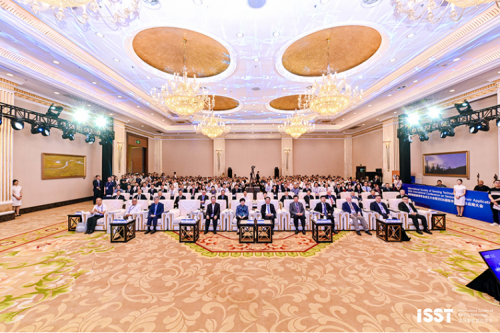
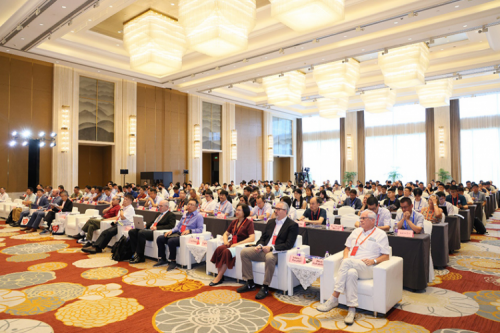
On the morning of August 7, the opening ceremony was officially held at the Starlight Theater of the Student Development Center. Marking the 20th anniversary of ISTAI, the ceremony began with a special commemorative video, Two Decades of Intelligent Metrology, A New Journey in the Whole World, which documented the development of an international academic exchange platform in the field of measurement and control in China. Professor Guo Fu, President of BISTU, then delivered a welcome address, providing an overview of the university’s five distinctive research areas, including intelligent sensing, intelligent control, and high-end instrumentation, as well as its 34 provincial- and ministerial-level research and innovation platforms. He expressed the university’s vision of leveraging ISTAI to further promote cross-border and interdisciplinary collaboration among industry, academia, and research institutions. Ms. Li Zhang, Deputy Secretary-General of the CIS, reviewed the development of ISTAI, which has been held biennially for 11 editions, and outlined the Society’s core role in establishing international channels for academic exchange in measurement and control. She also provided an overview of the academic program of this year’s conference, including the keynote presentations and parallel sessions. After several rounds of rigorous review by nearly 20 experts in the field, 112 academic papers were accepted. All accepted papers were published in the IET Conference Proceedings, made available through the IET Digital Library, and indexed by Ei Compendex. Following the opening remarks, all attending leaders and keynote speakers gathered for a group photo.
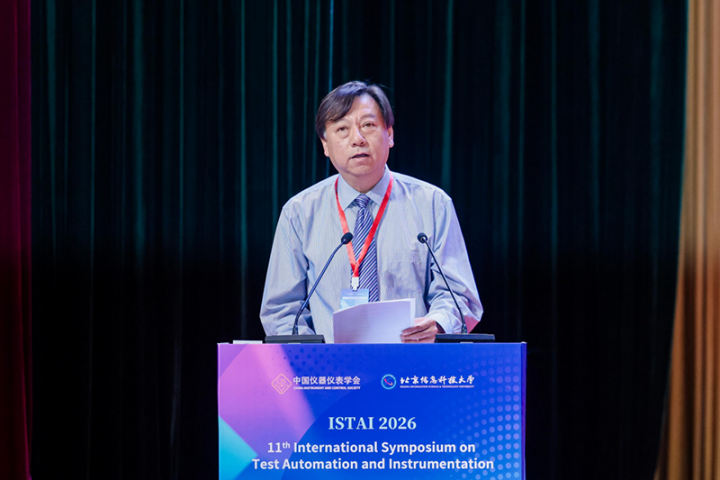
Prof. Fu Guo, President of Beijing Information Science and Technology University (BISTU), Delivering a Welcome Address
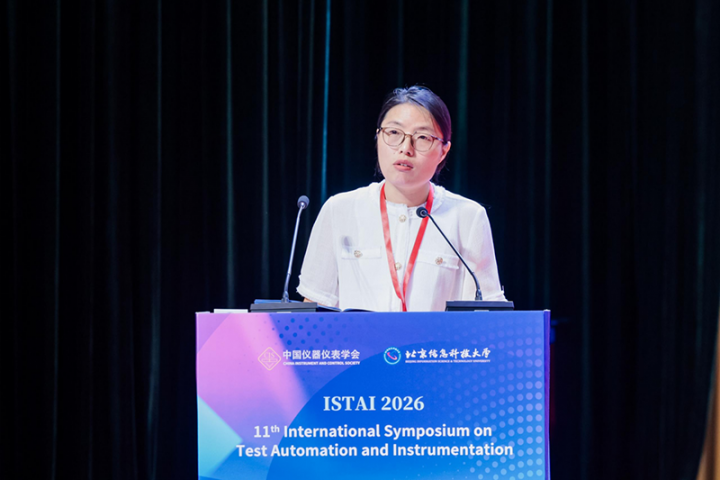
Ms. Li Zhang , Deputy Secretary-General of the CIS, Delivering a Remark
Keynote Presentations with Experts from Around the World Sharing Cutting-Edge Advances
The session was chaired by Professor Hongjun Wang. The first keynote presentation was delivered by Professor Aiguo Song of Southeast University. As the opening speaker of the day, Professor Song, whose research has long focused on robotic perception and control, provided a systematic overview of power inspection and maintenance robot technology. Addressing the complex operating environments of power facilities, he presented key engineering solutions for environmental perception and autonomous multi-task inspection and maintenance. Following Professor Song’s presentation, Professor Shervin Shirmohammadi of the University of Ottawa, Canada, took the stage. As a former Editor-in-Chief of IEEE Transactions on Instrumentation and Measurement (IEEE TIM) and Director of the Discover Laboratory, Professor Shirmohammadi examined the central role of uncertainty quantification in intelligent measurement and control systems from two perspectives: measurement standards and artificial intelligence theory. During the morning coffee break, the ISTAI 20th Anniversary Special Exhibition was also opened on the first floor of the venue, providing participants with an opportunity to view the exhibition and exchange ideas. The third keynote presentation was delivered by Researcher Guibin Bian of the Institute of Automation, Chinese Academy of Sciences, focusing on the intelligent microsurgery robot supported by a national key R&D program. He introduced key technologies including micrometer-scale biomimetic operating mechanisms, multimodal perception, and precision human–robot collaborative control. Professor Hui Zhang of Beihang University delivered the final keynote presentation of the morning, focusing on the safety technology system for intelligent vehicles. He provided a systematic overview of an integrated technical approach encompassing drive-by-wire chassis fault diagnosis, trusted in-vehicle security protection, and simulation and validation for extreme scenarios.
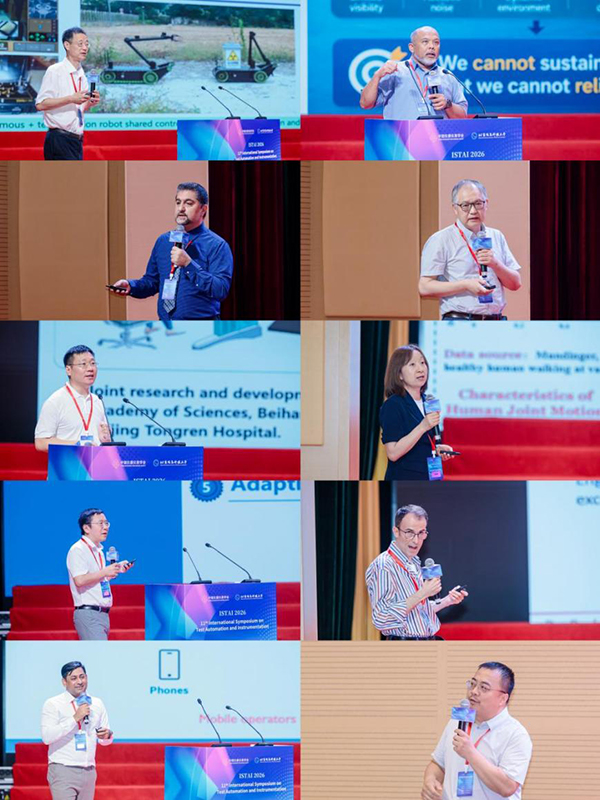
In the afternoon, the session was chaired by Dr. Yi Gong, followed by six keynote presentations. Professor Syed Agha Hassnain Mohsan of Jimei University, recognized as one of the world’s top 2% scientists, was the first speaker of the afternoon. He provided an overview of the fundamental theories, technological developments, and future trends of NOMA-Empowered Integrated Sensing and Communication toward the evolution of 6G. Professor Mohd Rizal Arshad, Academician of the Academy of Sciences Malaysia and Dean of the School of Robotics at Xi’an Jiaotong-Liverpool University, shared an integrated application framework for multimodal sensing and digital twins in autonomous underwater exploration systems, focusing on the sustainable exploration of ocean resources. Researcher Yinnian Liu of the Shanghai Institute of Technical Physics, Chinese Academy of Sciences, who has served as the chief designer of multiple hyperspectral satellite payloads, systematically presented the latest progress in space-air-ground-deep Earth integrated hyperspectral imaging technology and its applications in agricultural and forestry management and ecological resource monitoring. Professor Minghui Yao of Tiangong University introduced a novel unidirectional excitation mechanism and developed a wearable up-frequency energy harvester adapted to human motion conditions. Associate Professor Damiano Padovani of Guangdong Technion-Israel Institute of Technology addressed the demand for low-carbon development in construction machinery and demonstrated the engineering value of virtual sensors in energy consumption optimization and decarbonization management for mobile hydraulic equipment. The final keynote presentation of the session was delivered by Professor Junfang Fan of Beijing Information Science and Technology University. Focusing on wide-range variable-parameter spinning aircraft, she proposed a multi-source navigation fusion and decoupled control method, effectively enhancing aircraft attitude stability and high-precision guidance capabilities.
Four Parallel Sessions Explore Key Areas in Depth
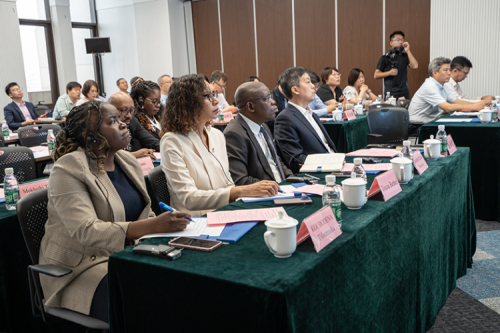
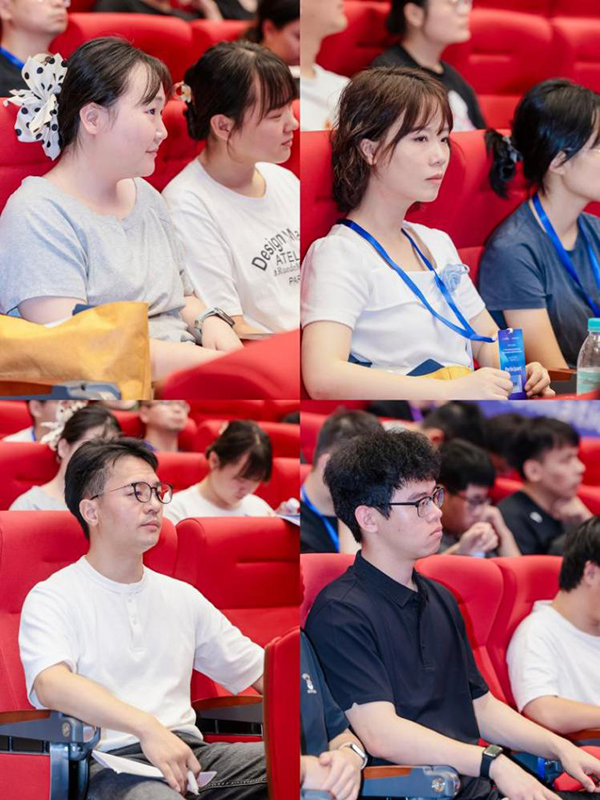
On August 8, the conference hosted four parallel technical sessions at Building B of BISTU. Each session was jointly chaired by Chinese and international experts to facilitate academic exchange, with a total of 61 authors delivering oral presentations. The four sessions featured focused discussions in four specialized areas: Advanced Sensing and Integrated Measurement Systems; Signal Processing, Machine Intelligence, and Data Analytics; Prognostics, Health Management, and Smart Manufacturing; and Environmental Informatics and Intelligent Sensing Applications.
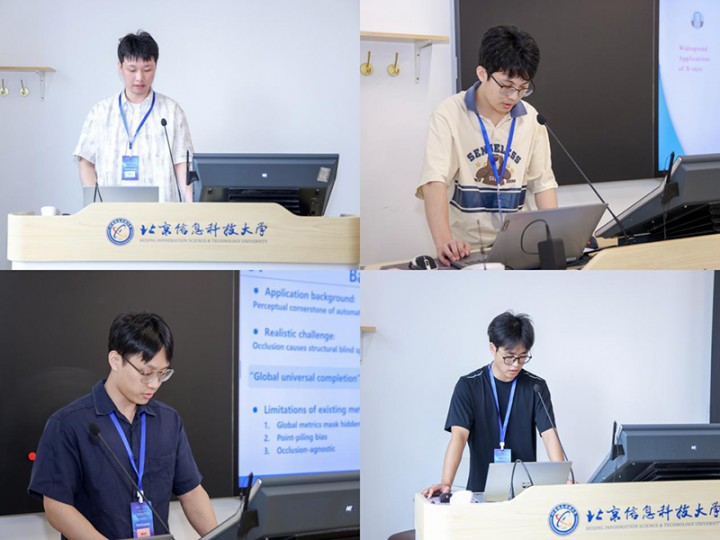
The oral presentations covered a wide range of theoretical and engineering research topics, including 3D SLAM reconstruction, industrial precision inspection, fault identification in rotating equipment, bridge structural health monitoring, and all-domain fire detection and inspection using unmanned aerial vehicles. A dedicated poster exhibition area was also set up at the venue, providing participants with opportunities for face-to-face exchanges on experimental approaches, measurement data, and pathways for technology transfer and implementation. These activities effectively established a regular platform for academic exchange among universities, research institutions, and instrument manufacturing enterprises.
A New Starting Point for a High-Level International Academic Exchange Platform
Since its inception in 2006, ISTAI has been held biennially as a regular event, consistently addressing the core needs of measurement and control research. It has continuously provided an open platform for cross-border and interdisciplinary exchange, contributing to advances in fundamental theory, the development of young researchers, and the engineering application of cutting-edge technologies. These efforts have steadily strengthened the international academic influence of China’s intelligent measurement and control community.
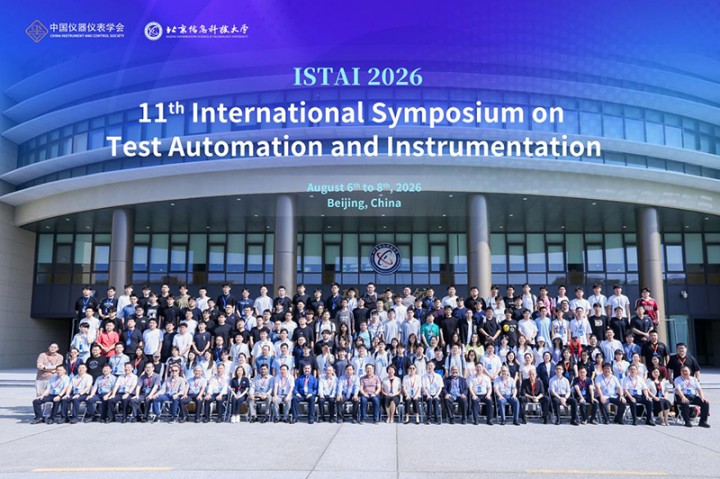
Experts and young researchers attending the conference widely praised its broad academic coverage and strong focus on cutting-edge developments. The conference not only systematically reviewed two decades of progress in the field, but also provided clear directions for future fundamental research, university–industry collaborative innovation, and international research cooperation. Looking ahead, the CIS, in collaboration with BISTU, will continue to strengthen the ISTAI academic brand, closely align with major national development strategies in intelligent manufacturing, aerospace remote sensing, and smart energy, and further improve the conference’s comprehensive academic program. These efforts will help build an international academic exchange platform that combines theoretical depth with practical industrial value and contribute to high-quality innovation and development in intelligent measurement and control technologies in China.


