


International Workshop on Regional and Country-Specific “Eco-Security National Research Centers” was Held in Beijing
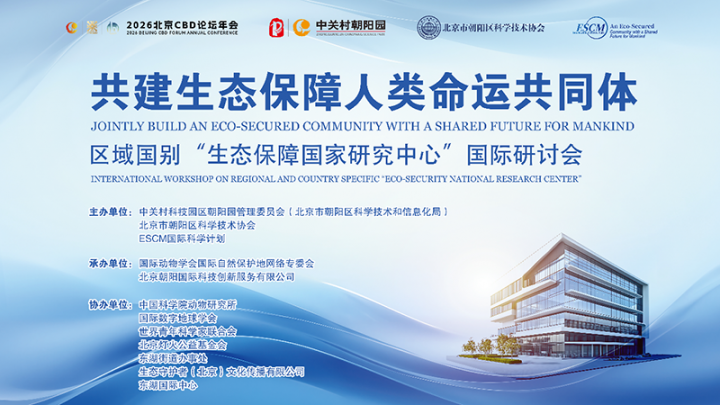
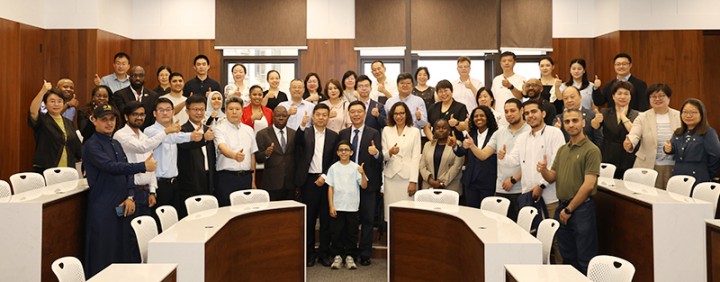
On June 16, Parallel Forum of the 2026 Beijing CBD Forum "Jointly Build an Eco-Secured Community with a Shared Future for Mankind — International Workshop on Regional and Country-Specific 'Eco-Security National Research Centers'" was held at the Headquarters of International Science and Technology Organizations (HISTO). Leaders from Chaoyang District, Chargés d'Affaires of the Embassies of Togo and Grenada, as well as experts, scholars, international organization representatives, and young researchers from 12 countries — over 70 attendees in total — gathered to launch two initiatives: the Lighting-up Ceremony for the "Eco-Security National Research Center" and the "Eco-Science Popularization Campaign in Primary and Secondary Schools." Embassies of multiple countries in China expressed their congratulations, and experts from 35 countries sent congratulatory videos.
Dr. Jian Zhang, the Deputy Secretary-General of China Instrument and Control Society, was invited to attend the event.
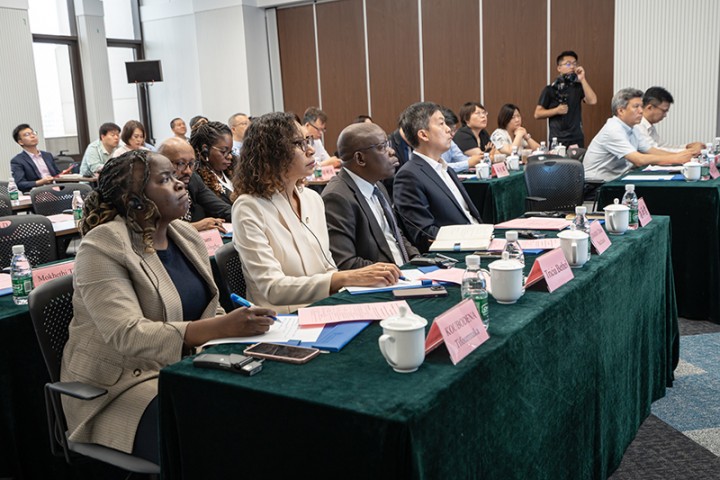
Focusing on Eco-Security: Building International Consensus for Cooperation
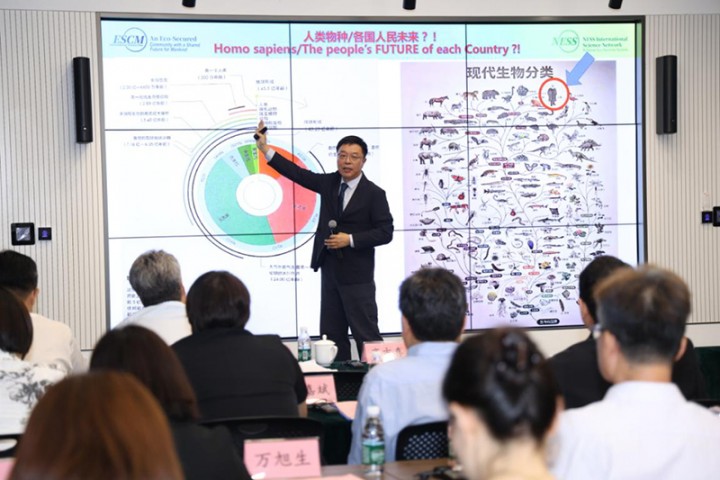
Zejun Pan, Vice Governor of Chaoyang District, and Jixi Gao, the Chief Scientist at the Satellite Environment Application Center of the Ministry of Ecology and Environment, delivered speeches respectively. Dexin Tian, Chief Scientist of the ESCM International Science Program, presented the 2026–2035 Ten-Year Outlook. According to Tian, the ESCM International Science Program was jointly launched in November 2022 by experts and scholars from 159 institutions across 26 countries, with the scientific goal of promoting the building of an Eco-Secured Community with a Shared Future for Mankind, and providing scientific support for the Eco-Security conditions needed for the sustained survival of people and children in all countries. Over three years of development, the Program has evolved from a scientific initiative into concrete action, with multiple countries jointly participating and collaboratively advancing country-level implementation.
Releasing Key Outcomes: Initiating Eco-Science Popularization Practice
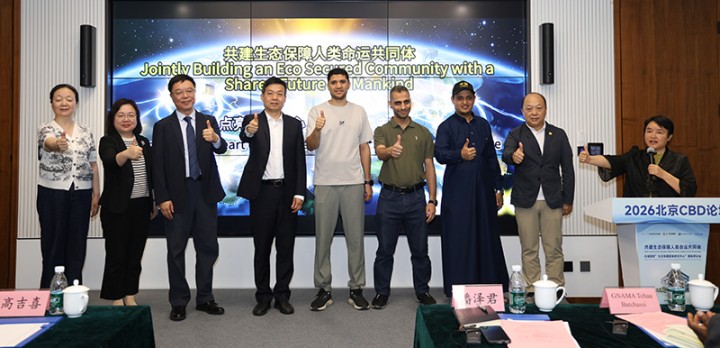
At the event site, the participating guests jointly inaugurated the "Ecological Security National Research Center" and the "Eco-Science Popularization Campaign in Primary and Secondary Schools". These projects will serve as a hub for public scientific research and primary and secondary school science education in various countries, coordinating the efforts of various universities, research institutions to advance ecological security research and provide support for the promotion of science education for young people.
Deepening Dialogue: Translating Resources into Concrete Action
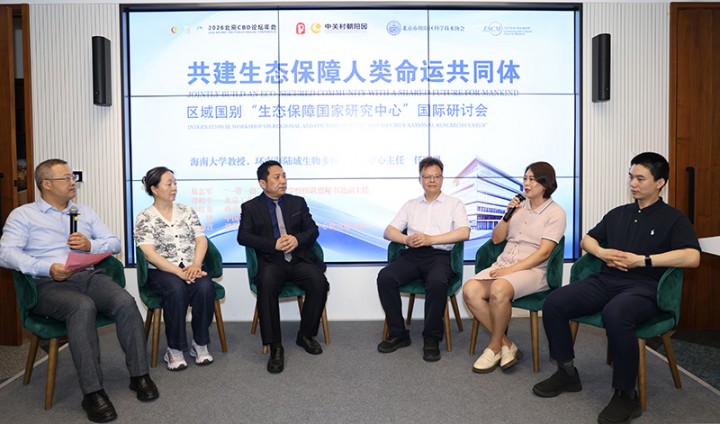
At the round-table discussion titled "Prospects for Promoting Global Ecological Security Science Education," experts and scholars from institutions including the China Instrument and Control Society, Nanjing Normal University, Beijing University of Technology, and the Alliance of International Science Organizations along the Belt and Road, as well as representatives from Granada, Rwanda, and Lesotho, shared their experiences and approaches based on their own practices.
Dr. Jian Zhang, Deputy Secretary-General of the China Instrument and Control Society, noted that instrumentation serves as the "eyes" and "tools" of scientific researchers, playing a crucial role in ecological monitoring—from PM2.5 monitoring and water quality testing to tracking migratory birds and recording vegetation changes. Behind these cold data lie vivid ecological stories. For science education in primary and secondary schools, the Society is continuously advancing the "Scientific Instruments into the Classroom" initiative. Through open laboratories, science popularization activities, and youth innovation practice competitions, children are given hands-on experience with simplified testing equipment, transforming abstract ecological knowledge into tangible, practical scientific experiences that cultivate their scientific literacy and sense of ecological responsibility. Going forward, China Instrument and Control Society is committed to further opening up industry resources, enabling more children to decipher the ecological codes embedded in data through hands-on instrument operation, to deeply understand the scientific connotation that "lucid waters and lush mountains are invaluable assets," and to jointly safeguard our shared human home through science and science education.
The successful hosting of this workshop represents yet another concrete practice of collaboration with the HISTO. Going forward, the ESCM Plan will continue to leverage the platform advantages of the HISTO, actively engage with multiple institutions in high-level international scientific exchanges on Eco-Security, and facilitate the matching and implementation of relevant international science and technology resources and projects — contributing to the building of Beijing as a center for international exchanges and international scientific and technological innovation.